Troulla Gorge is located in southern Crete, within the Heraklion regional unit, in the eastern part of the Asterousia Mountains, a few kilometers east of Tsoutsouros Gorge.
It is a smaller but equally impressive gorge, known for its striking shape and dynamic natural features.
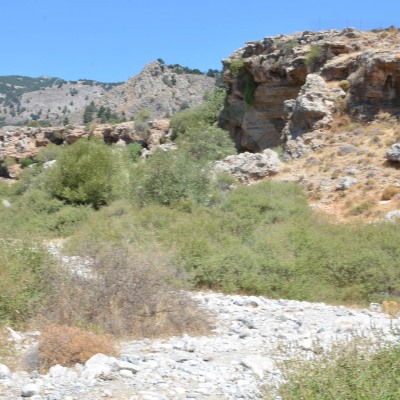
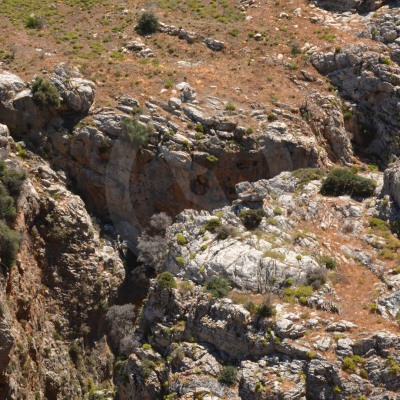
The gorge opens like a narrow “cut” in the landscape, with steep rocky walls and intense terrain. Despite its relatively small size, it is rich in natural elements, featuring numerous waterfalls along its route. The largest waterfall reaches a height of about 15 meters, followed by around 15 smaller ones, creating an impressive water formation, especially during the winter months.
Due to its proximity to the larger Tsoutsouros Gorge and its similar geological characteristics, the first team that explored and equipped it humorously named it “Tsoutsouraki.”
The entrance of the gorge is located slightly west of the impressive Troulla rock formation of Tsoutsouros, in the area known as Meli Lakkos (a fertile hollow traditionally associated with honey production), while its exit lies in the area of Staousa, near the village.
Descending the gorge requires technical canyoning equipment, including ropes, and is suitable mainly for experienced adventurers. The presence of multiple waterfalls makes it particularly challenging and exciting.
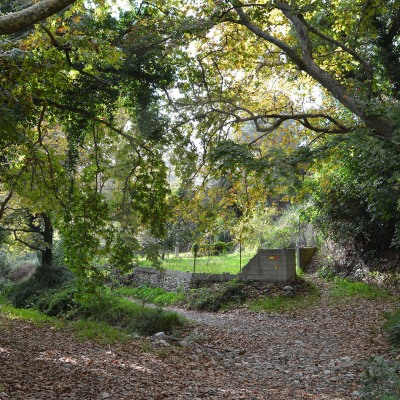
The surrounding landscape is characterized by wild natural beauty, dry Mediterranean vegetation, and strong geological contrasts typical of the Asterousia Mountains.
Troulla Gorge is a unique destination for canyoning enthusiasts and adventure seekers, offering an intense and authentic exploration experience in southern Crete.