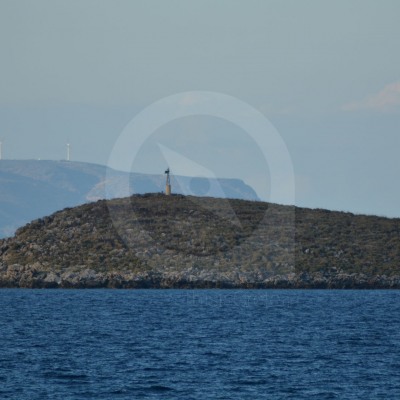
Gianysada is a small, barren islet located northeast of the Lasithi region, off the coast of Sitia, forming part of a cluster of islets in the Cretan Sea.
Together with the nearby Dionysades islets, it creates a remote yet ecologically significant environment that remains largely untouched by human activity.
The landscape of Gianysada is defined by low vegetation, rocky formations, and steep coastlines, providing a habitat for rare species of flora and fauna. The islet is included in the Natura 2000 network of protected areas, as it serves as a refuge for important seabird populations, as well as for the Mediterranean monk seal, one of Europe’s most endangered mammals.
Despite its small size and lack of infrastructure, Gianysada holds particular interest for nature enthusiasts and researchers due to its ecological value and unspoiled character. Access is only possible by sea and under certain conditions, which helps preserve its natural balance. Gianysada is not a destination for mass tourism; rather, it stands as a living example of Crete’s wild, untouched beauty, highlighting the importance of protecting fragile island ecosystems.