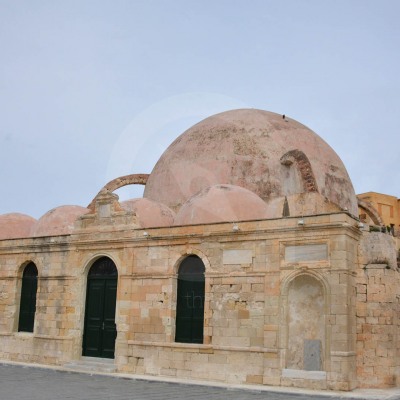
The Archaeological Museum of Rethymno is one of the most atmospheric cultural spaces in Crete, temporarily housed in the impressive Venetian church of St. Francis, in the heart of the old town.
The building itself, with its grand architecture dating back to the 16th century, provides the ideal backdrop for exhibiting treasures excavated throughout the prefecture. Its collection spans a vast timeline, from the Neolithic era and the peak of Minoan civilization to classical antiquity and Roman rule.
The highlight for most visitors is the finds from the Late Minoan Cemetery of Armeni. This is a unique series of clay larnakes (sarcophagi) featuring striking decorations of hunting scenes, bull-leaping, and religious symbols, offering valuable insights into the burial customs and beliefs of the time. Additionally, the collection includes exceptional examples of pottery, stone tools, gold jewelry, and figurines that attest to the prosperity of ancient settlements in Rethymno.
Special mention should be made of the museum's rare and rich coin collection, considered one of the most important on the island. These coins, originating from various Cretan city-states, highlight the economic power and autonomy of the region during antiquity. The tour concludes with Roman sculptures and inscriptions standing under the stone vaults of the church, creating a bridge between the past and the present. The museum not only showcases the historical continuity of Rethymno but also the city's ability to integrate its archaeological heritage into its vibrant medieval fabric.