Ancient Itanos, also known as Erimoupolis, is located at the northeastern tip of Crete, just a stone's throw from the famous palm forest of Vai.
It was one of the most powerful coastal city-states of eastern Crete, with a history spanning from prehistoric times to the early Byzantine period. Its strategic position made it a vital commercial hub for trade between Crete, the East, and Egypt. The city was so influential that it minted its own currency and dominated the entire region of modern-day Sitia.
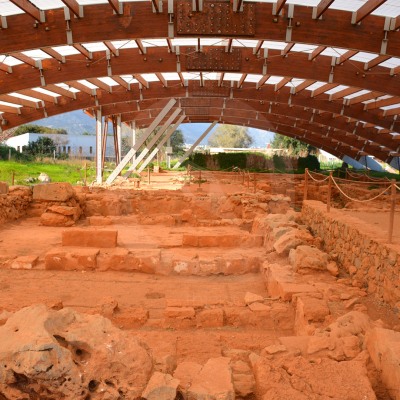
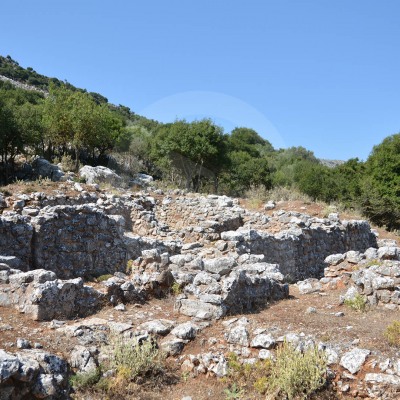
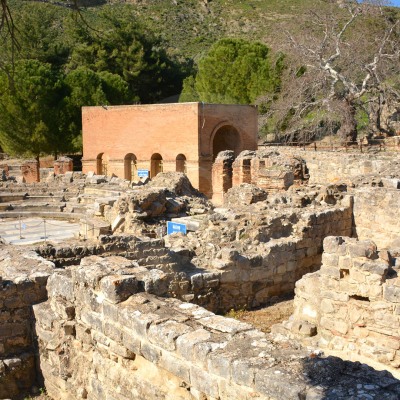
Exploring the archaeological site is a rare experience, as the ruins are scattered across a landscape of wild natural beauty that meets the sea. Visitors can explore the city’s two acropolises, built on hills for security and maritime surveillance, as well as the impressive Early Christian basilicas, which testify to the importance of Itanos during the early Christian centuries. The remains of public buildings and fortifications, intertwined with low vegetation and palm trees, create an evocative atmosphere of a forgotten civilization.
The most enchanting feature of Itanos, however, lies beneath the water's surface. Due to coastal subsidence, a significant portion of the ancient city is now submerged, making it one of the top destinations for snorkeling in Crete. With just a mask, one can distinguish building foundations and parts of the ancient harbor on the seafloor of the crystal-clear bay. Itanos was likely destroyed by a massive earthquake in the 8th century AD and later abandoned due to Saracen pirate raids, remaining to this day a place where history "meets" the deep blue of the Aegean.