Ancient Lato, built in a fortified position between two steep hills overlooking the village of Kritsa, is one of the most important and well-preserved city-states of the Classical and Hellenistic periods in Crete.
Its strategic location offered its inhabitants panoramic views of the Mirabello Bay, allowing full control over the region's passages. The city was named after Leto (Lato in the Doric dialect), the mother of Apollo and Artemis, although its patron goddess was Eileithyia, who was also depicted on its coins.
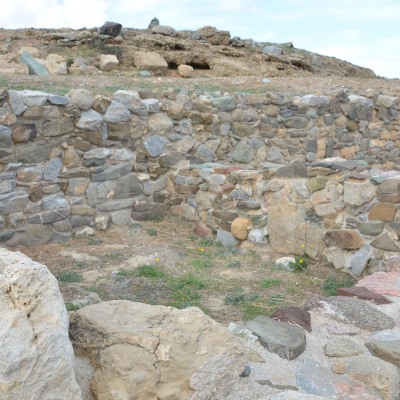
Exploring the archaeological site, visitors have a rare opportunity to see an ancient city's layout almost intact. At its heart lies the Agora, an open public space that was the center of political and social life. Next to it stands the Prytaneion, the most significant public building where the city's leaders (the Kosmoi) met, while the Theater also remains, used for both performances and citizen assemblies. The architectural arrangement, with houses built on terraces and narrow paved streets, reflects excellent urban planning that was perfectly adapted to the rugged terrain.
Lato reached its peak during the 4th and 3rd centuries BC, serving as a powerful maritime and military force with its own port, Lato pros Kamara (modern-day Agios Nikolaos). Over time, the inhabitants began to abandon the mountain city to settle in their seaside port, leading to Lato's gradual decline. Today, a visit to the site offers not only historical insight but also a sense of tranquility, as the imposing ruins among ancient olive groves remain an eternal witness to the island's Doric heritage.